Good and Evil Comic Book
- 4.7
- Rating
- 10.00K
- Installs
- Free
- Price
 Analysis by App-foxy
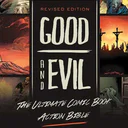
I approached Good and Evil Comic Book as a reading app rather than a game, and that distinction matters from the first minute. Its purpose is to present the Bible as a chronological comic-book journey, covering more than three hundred pages in a visual format. The result is much closer to a guided illustrated reading experience than to a typical comics platform with a large catalogue, social tools, or rapid-fire entertainment.
That focused design is its main appeal. Instead of asking me to choose between unrelated series, it gives the whole project a clear direction: follow the movement from one biblical story to the next and use the artwork as a way into the text. I found it especially approachable when I wanted a simple starting point for reading with a child, discussing a story with someone unfamiliar with the Bible, or revisiting familiar passages in a more visual form.
The app is free, belongs to the Comics category, and comes from No Greater Joy Ministries, Inc. Its average rating is 4.7 from around 166 ratings, while its reach has passed 10K installs. Those figures suggest a small but clearly positive audience rather than a mass-market comics service. It is marked Everyone 10+, which fits the educational and religious subject matter while still acknowledging that some biblical scenes may need a little context for younger readers.
You May Also Like

 Blood Strike: 2.5 Anniversary
Blood Strike’s Loadouts Turn Every Drop Into a Tactical Gamble
A close look at Blood Strike’s custom loadouts: how fast access to signature weapons reshapes its battle royale rhythm, rewards preparation, and narrows the gap between fights.

 Pandora - Music & Podcasts
Pandora’s Music Is Easy to Start, but Harder to Recover
Pandora’s strength is its low-effort path from a seed to a station. Its weak spot is how much confidence it asks you to place in connection, setup, and quiet recovery.

 8 Ball Pool
 Is Built on Rivalries, Rematches, and Routine
A close look at the rivalries, rematches, shared routines, and unanswered safety questions that turn a quick pool match into a persistent mobile community.

 Samsung Music
’s Quiet Strength Is Playing What You Already Own
Its reach comes less from spectacle than from dependable access to a personal library. That simplicity is both the app’s strongest retention engine and its ceiling.

 AccuWeather: Weather Radar
AccuWeather Review: A Quick, Clear Forecast for Everyday Decisions
For everyday plans, the best forecast is the one you can understand quickly. AccuWeather makes rain timing, radar, and local conditions easy to act on, with a few trade-offs.

 Hill Climb Racing
Why Hill Climb Racing Still Turns Crashes Into One More Run
A tiny car, a bumpy hill and one more upgrade: Hill Climb Racing keeps resurfacing because its simple chaos makes every near-miss feel personal.
More From Our News Desk
View All News


How the reading experience feels in everyday use
I find the everyday experience is best when I treat the comic as a shared book rather than a feed to skim: a short stretch of reading leaves room to notice how one story leads into another. That approach also makes it easier to decide whether the visual format suits the person reading with me. Before making it part of a routine, I’d consider what choices and trust signals are actually visible.
Quick opening and a low-demand reading format
Good and Evil is the kind of app I would expect to feel light during ordinary reading because its central task is straightforward: open the comic, move through illustrated pages, and follow the sequence. There is no need to learn a complicated control scheme or manage a collection before beginning. That makes it less intimidating than a full digital-comics service, particularly for a first-time reader who simply wants to understand what the app is about.
The chronological arrangement is more important than it may sound. Bible stories are often encountered as separate lessons, sermons, or children’s books, so the larger arc can become fragmented. Here, the order gives the material a sense of progression. I could use one sitting to introduce the broad storyline, then return later to continue from the point where I stopped rather than jumping randomly between unrelated episodes.
My practical tip is to treat it like a short reading session, not something to rush through in one sitting. The comic format makes the pages approachable, but the subject matter benefits from pauses. Reading a smaller section and talking about what happened can be more useful than simply turning pages until the end. This is one of the app’s less obvious strengths: its visual structure naturally supports conversation.
The experience also suits a shared screen. A parent, teacher, youth leader, or older sibling can read a page aloud and ask what the images communicate before explaining the story. That workflow is more effective than handing over a long block of text, especially for readers who lose interest when a religious narrative feels too abstract. The app does not need to replace a Bible or a study guide to be useful; it can serve as the visual doorway before those materials.
Where heavier reading sessions may feel different
A longer session places more emphasis on navigation and personal reading habits than on raw processing power. The app’s value comes from the accumulated sequence of pages, so a reader who wants to compare several passages, jump backward repeatedly, or study details may find a comic viewer less flexible than a dedicated Bible app. A conventional Bible application is usually better for searching a particular verse, comparing translations, bookmarking references, or moving directly to a known book.
That trade-off is deliberate. Good and Evil is strongest when I follow its visual narrative from beginning to end. It is weaker as a reference tool. If I already know exactly which passage I want, the comic format may add an extra step instead of saving time. In that situation, a searchable Bible app or a printed study Bible would be the more efficient choice.
For families, a useful approach is to separate browsing from discussion. Let the reader look through the artwork first, then return to the pages that raised questions. This avoids interrupting every panel with explanations while still making room for thoughtful conversation. It also helps distinguish what the comic shows directly from what a reader may be assuming, an important habit when visual storytelling compresses a larger narrative.
Another practical insight is to use the chronological structure as a memory aid. After finishing a section, I would summarize the main event in one sentence and connect it to the previous section. That simple routine turns the app from passive screen time into a lightweight learning tool. It is particularly useful for someone who knows individual Bible stories but struggles to place them in a wider sequence.
Stability, continuity, and returning later
For an app like this, reliability is not only about whether it opens. It is also about whether the reading experience feels dependable when I return after a break. A chronological comic works best when I can resume without losing the thread. I would therefore recommend noting the last page or story reached, especially when sharing the device with other family members. That small habit protects the continuity of a reading plan even if different people use the app at different times.
The current version is 2025.9.4, so the project is still represented by a contemporary release rather than an abandoned legacy build. The stated minimum operating-system requirement is 2.0, which is unusually broad by modern standards and indicates an intention to support older devices. In practical terms, that makes the app more accessible to families using a spare phone or an older tablet for reading.
Older hardware can still introduce everyday friction. A device with limited storage, an aging battery, or a crowded background workload may make any image-based reader feel less comfortable than a plain text app. I would close unrelated apps before a long shared reading session and keep the screen brightness at a level that is comfortable rather than maximum. Those steps are not special requirements of the comic; they are sensible ways to make illustrated reading easier on modest hardware.
Recovery is also worth considering from a user’s point of view. If I am interrupted by a call, a child, or a change of activity, the best way to preserve the session is to leave myself a clear marker: remember the story, note the page, or take a quick personal reminder. Readers who demand automatic, highly detailed progress tracking may prefer a mature e-reader or Bible study platform with stronger organization tools. Good and Evil is better approached as a focused visual book than as a fully featured study database.
Older phones, tablets, and screen comfort
The broad minimum OS requirement makes this a plausible option for an older Android device, but compatibility alone does not guarantee an equally pleasant experience on every screen. Comic panels depend on readable lettering and clear artwork. A small phone can work for a quick look, yet a tablet or larger display is likely more comfortable for children reading together or for an adult who wants to examine each panel without constant zooming or repositioning.
This is one of the clearest device trade-offs. A phone is convenient for private reading and short sessions, while a tablet is better for shared use and discussion. I would choose the tablet when the app is being used in a classroom, family setting, or small group. I would choose the phone when portability matters more than presentation. The app’s simple premise does not remove the physical limits of screen size.
Resource demands should also be judged realistically. This is not a graphics-heavy game requiring rapid interaction, so I would not expect the same strain associated with modern 3D titles. Still, illustrated pages are more demanding than plain text, and extended screen use can affect battery life and comfort depending on the device. The sensible expectation is a relatively modest reading workload, not an absolute promise that every old phone will behave identically.
Readers should also remember the age guidance. Everyone 10+ is a useful signal for families, but it is not a substitute for parental judgment. Biblical stories can include conflict, violence, loss, fear, and difficult moral choices. The comic presentation may make those moments easier to approach, but it does not remove their seriousness. I would preview the material or read alongside younger children who may need help understanding what they see.
Who will enjoy it, and who should choose something else?
I would recommend Good and Evil to readers who want a visual introduction to the Bible, families looking for a shared reading activity, and people who find a chronological story easier to follow than a collection of separate passages. It is also a sensible choice for someone who wants a free resource with a clear religious purpose rather than an entertainment app filled with unrelated comics.
It is less suitable for readers seeking superhero series, manga, romance, comedy, or a broad catalogue. The Comics label describes the presentation, not a variety of genres. Likewise, serious Bible students may quickly reach for another tool when they need original-language notes, cross-references, multiple translations, detailed commentary, or instant verse search. The app can support an introduction or visual recap, but it should not be mistaken for a complete study environment.
Compared with a printed children’s Bible, the app is easier to carry and may feel more engaging for a screen-oriented reader. A printed book, however, can be easier on the eyes, simpler to share without notifications, and more comfortable for extended discussion around a table. Compared with ordinary comic apps, Good and Evil offers a much narrower but more coherent purpose. Compared with a regular Bible app, it sacrifices search and reference depth in exchange for visual continuity.
That comparison helped clarify my own recommendation: choose this app when the question is “How can I make the overall story easier to enter?” Choose a Bible reference app when the question is “Where can I find and compare a specific passage?” Choose print when the priority is quiet, distraction-free group reading. None of those choices makes the others unnecessary; they serve different moments.
Small workflows that make the app more useful
My favorite way to use it would be a three-step routine. First, read a manageable section without trying to explain every detail. Second, ask the reader to retell the sequence using the panels as prompts. Third, consult a fuller Bible text or discussion resource if a question needs more depth. This keeps the comic in its strongest role while preventing it from carrying more interpretive weight than a visual adaptation can reasonably handle.
A second workflow is useful for group leaders. Before a meeting, select a stopping point and prepare one question about sequence, one about a character’s decision, and one about the reader’s reaction. The chronological format gives the conversation a natural beginning and ending. It also reduces the temptation to turn the session into a page-by-page lecture, since participants can first describe what they noticed themselves.
For independent readers, I suggest keeping a simple story map outside the app. A few words about each completed section can make it easier to resume after several days and reveal how the narrative develops. This is especially helpful because a visual sequence can feel clear while reading but become harder to recall later. The map turns the app into a gradual learning project rather than a one-time browse.
There is also a useful accessibility-minded trade-off. The comic format can help readers who struggle with long passages of uninterrupted text, but images cannot communicate every nuance on their own. Reading captions aloud, enlarging the display when necessary, and allowing extra time for questions can make the experience more inclusive. If a reader needs advanced text customization or highly structured accessibility controls, a dedicated reading platform may be a better fit.
My performance verdict after weighing the trade-offs
Good and Evil Comic Book succeeds because it keeps its mission narrow. It offers a free, chronological, illustrated route through Bible stories and does not require the reader to understand a complicated app before beginning. The modest install base and strong average rating point to a focused audience that has responded well, while the 2025.9.4 release shows that the app remains represented by a current version.
Its limitations are equally clear. It is not a replacement for a searchable Bible, a scholarly study tool, a general comics subscription, or a paper book for every situation. Readers may need their own method for tracking progress, and small screens can reduce the comfort of examining detailed panels. The age guidance also deserves active adult judgment because the stories can involve serious themes even when presented in an approachable format.
On speed and resource use, I would set moderate expectations: this is a page-based reading experience, not an action-heavy game, so its demands should generally match the simplicity of its purpose. The more meaningful performance question is whether the device and screen make the artwork comfortable to read. On an older phone, it may be perfectly adequate for short sessions; on a larger display, it becomes more convincing as a shared family or teaching resource.
My final recommendation is simple: use it as a visual starting point and a conversation tool, not as your only Bible resource. If you want a coherent illustrated journey, especially for a family or beginner, I think it is worth trying at no cost. If your priority is deep study, precise searching, or a wide range of comics, I would choose a different app and keep this one for the moments when pictures and chronology can make the larger story easier to understand.
FAQs for Good and Evil Comic Book
01What is the main storyline of Good and Evil Comic Book?
Good and Evil Comic Book is a captivating narrative-driven app that explores the timeless battle between good and evil. Users are immersed in a rich storyline featuring complex characters, intriguing plots, and moral dilemmas. The app allows readers to make choices that influence the direction of the story, providing a unique interactive experience.
02Is Good and Evil Comic Book suitable for all ages?
Good and Evil Comic Book is primarily designed for a mature audience due to its complex themes and occasional intense scenes. While it offers educational value through its exploration of moral questions, parents should review the content to determine its suitability for younger readers, as it may include violence and mature themes.
03Can I access Good and Evil Comic Book offline?
Yes, Good and Evil Comic Book allows users to download chapters for offline reading. This feature is particularly useful for users who want to enjoy the story on the go without needing a continuous internet connection. However, initial downloads and updates do require internet access.
04Are there in-app purchases in Good and Evil Comic Book?
Good and Evil Comic Book offers in-app purchases that unlock additional content and chapters. While the app provides free initial content, users can choose to purchase additional storylines and special editions to enhance their experience. The app is upfront about costs, allowing informed purchasing decisions.
05How frequently is new content added to Good and Evil Comic Book?
The developers of Good and Evil Comic Book are committed to regularly updating the app with new content. Typically, new chapters and story arcs are released monthly, ensuring that users always have fresh material to explore. Users can enable notifications to stay informed about the latest updates.
Pros
- Engaging storyline with rich detail.
- Stunning artwork enhances the narrative.
- Easy navigation through the comic pages.
- Regular updates keep content fresh.
- Offline reading available for convenience.
Cons
- In-app purchases can be pricey.
- Occasional crashes on older devices.
- Limited interactive features.
- Requires internet for initial download.
- Not suitable for younger audiences.

Good and Evil Comic Book
Gallery